rail
BAM completes Bristol Brabazon station as Henbury Line reopens to passengers
The contractor built the two-platform station on the former Filton Airfield for Network Rail, with hourly GWR trains to Bristol Temple Meads starting today and a second phase running to the Aviva Arena opening in 2028.
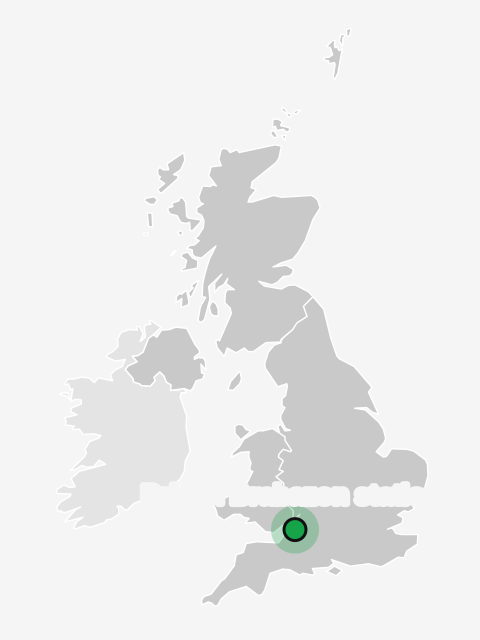
BAM has completed the first phase of Bristol Brabazon railway station on the former Filton Airfield, which opened to passengers today with Great Western Railway (GWR) trains running on the Henbury Line for the first time since 1964.
The contractor built the station for Network Rail. BAM said the scheme was funded by the West of England Mayoral Combined Authority and delivered by Network Rail, South Gloucestershire Council and partners. Network Rail described itself as a key partner and said the station was mainly funded by the Combined Authority, with contributions from South Gloucestershire Council, Bristol City Council, North Somerset Council and GWR.
Phase one provides two 126-metre platforms, an accessible footbridge with lifts, covered waiting areas and passenger information facilities, according to BAM. The Combined Authority said the station also has accessible parking and cycle storage. BAM said GWR services reach Bristol Temple Meads in about 23 minutes.
Richard Prime, Managing Director, Transport, BAM UK & Ireland, said: "Better rail connections make neighbourhoods more accessible, support local businesses and help people reach the places where they work, live and study."
The build
BAM said phase one was completed in under 20 months, saving 16 months against the original programme. Network Rail said groundwork and drainage started in July 2025 and the first phase was finished within 16 months.
Marcus Jones, Network Rail's Great Western route director, said: "Work began in July 2025 and just 16 months later, we're ready to welcome the first passengers to Bristol Brabazon."
South Gloucestershire Council said track and the first platform blocks were installed over Christmas. Network Rail said the footbridge went in over the late May 2026 bank holiday weekend, when a 750-tonne all-terrain mobile crane lifted the nine pieces forming the staircases and bridge deck.
BAM said more than 120,000 hours were worked without accident or incident. It also reported that about 3,750 tonnes of materials were reused and that design changes cut the concrete required by about 273 cubic metres, which it said together saved an estimated 394 tonnes of carbon emissions.
Funding and opening
The Combined Authority said it has invested £50m across both phases of the station. The station was officially opened on 19 November 2026 by Secretary of State for Transport Heidi Alexander, with the first passenger service, the 07:10 departure, running on Monday 23 November.
GWR will initially run an hourly service between Bristol Brabazon and Bristol Temple Meads, the Combined Authority said, with plans to increase frequency as the Aviva Arena and the Brabazon development progress. The station opens unstaffed, with a staffed ticket office to follow on the ground floor of The Interchange, a YTL building next to the station.
The station was known as North Filton until South Gloucestershire Council named it Bristol Brabazon. The council said approved plans at Brabazon include 6,500 new homes, three new schools and a new park.
Network Rail said Bristol Brabazon is the third new station to open in the Bristol area. BAM has built two of the city's recent rail schemes: Ashley Down station, which opened in 2024, and the £23m Eastern Entrance at Bristol Temple Meads, which opened in September 2026 and was formed by extending the passenger subway beneath platforms 13 and 15.
What happens next
Network Rail said a second construction phase starts almost immediately, adding a further footbridge, while work is already under way on the staffed ticket hall in The Interchange. The Combined Authority said phase two, delivered with YTL UK, will include a second footbridge with ramps, a staffed ticket office with ticket gates, and toilets.
Both bodies said phase two is due to complete in 2028 to align with the opening of the 20,000-capacity Aviva Arena, which South Gloucestershire Council said will be the third largest in the country.
Network Rail expects 1.3 million passengers a year to use Henbury Line services and said reopening the line will save seven million minutes of travel time on local roads each year. The Combined Authority said Bristol Brabazon is one of five new stations planned across the West of England over the next two years within a £600m rail investment.
Henbury station is next on the line. The Combined Authority awarded a detailed design contract for it in May 2026, Network Rail said, with the station due to open in 2028.
On the record: BAM UK & Ireland, South Gloucestershire Council, Bristol City Council, North Somerset Council
Sources
- BAM (opens in a new tab) (accessed 2026-11-23)
- West of England Mayoral Combined Authority (opens in a new tab) (accessed 2026-11-23)
- West of England Mayoral Combined Authority (opens in a new tab) (accessed 2026-11-23)
- Network Rail (opens in a new tab) (accessed 2026-11-23)
- Network Rail (opens in a new tab) (accessed 2026-11-23)
- South Gloucestershire Council (opens in a new tab) (accessed 2026-11-23)
- BAM (opens in a new tab) (accessed 2026-11-23)
- BAM (opens in a new tab) (accessed 2026-11-23)
This story was researched from the primary sources above and checked against them before publication. Spotted an error? Tell us and we will correct it promptly.