policy
DfT publishes transport resilience strategy with 22 commitments for next 5 to 10 years
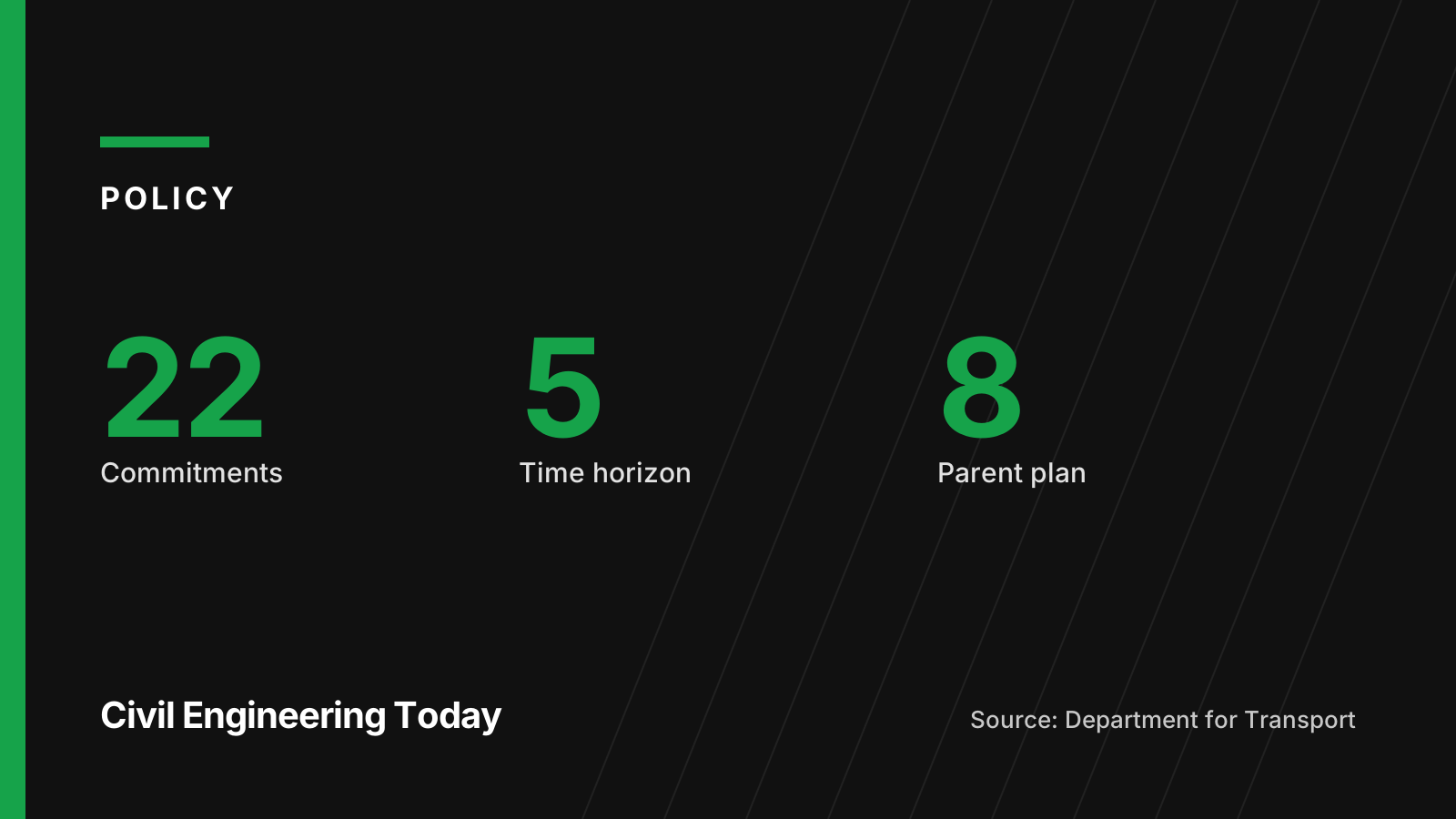
The Department for Transport has set out a five-to-10-year transport resilience strategy with 22 commitments, including a Transport Resilience Academy and a sector-wide resilience network, minister Keir Mather told MPs.
The Department for Transport (DfT) published its transport resilience strategy on 2 November 2026, setting the government's direction on the resilience of the UK transport system for the next five to 10 years.
Keir Mather MP, the minister responsible for transport resilience, announced the publication in a written statement to the House of Commons. The strategy makes 22 commitments, the department said, including a new training initiative, the Transport Resilience Academy, and a sector-wide transport resilience network.
Mather said the strategy puts into practice for the transport sector the approach set out in the government's resilience action plan, published in July 2025.
"Recent events show resilience cannot be treated as an 'optional extra', but as something that is vital to the operations of businesses and transport operators," Mather said.
The three aims
According to the written statement, the strategy has three aims: to better assess ongoing transport resilience so that areas for improvement can be identified and targeted; to enable the whole system, including transport users, to take action to improve resilience; and to strengthen government resilience capabilities.
The DfT's publication page describes the first objective as continuously assessing how resilient the UK transport sector is, so that interventions and resources can be targeted effectively.
The department said the strategy also commits to a tailored transport resilience training package and to a transport sector-wide network to support collaboration, share learning and strengthen resilience across the system.
Mather told MPs the strategy was developed with stakeholders from across government and the transport system. It has been placed in the libraries of both Houses and is available on GOV.UK.
"Transport resilience is a whole-government, whole-sector, and whole-society endeavour. No single organisation can deliver it alone," Mather said.
The wider resilience framework
The strategy sits beneath the UK Government Resilience Action Plan, which the Cabinet Office published on 8 July 2025 and last updated on 14 July 2025. The DfT said its strategy sets out what that plan means in practice for the transport sector.
The Cabinet Office's plan is framed around three objectives to be delivered in this Parliament.
Separately, the DfT's climate adaptation strategy for transport commits the department to implementing climate resilience standards by 2030, as set out in the government's 10-year infrastructure strategy.
Previous review
A previous government-commissioned review of transport resilience followed the wet and windy winter of 2013 to 2014. Richard Brown OBE was invited to chair that review of the resilience of the transport networks, according to a DfT ministerial statement from the time, and it put forward more than 60 recommendations.
On the record: Department for Transport
Sources
- Department for Transport (GOV.UK) (opens in a new tab) (accessed 2026-11-03)
- Department for Transport (GOV.UK) (opens in a new tab) (accessed 2026-11-03)
- Cabinet Office (GOV.UK) (opens in a new tab) (accessed 2026-11-03)
- Cabinet Office (GOV.UK) (opens in a new tab) (accessed 2026-11-03)
- Department for Transport (GOV.UK) (opens in a new tab) (accessed 2026-11-03)
- Department for Transport (GOV.UK) (opens in a new tab) (accessed 2026-11-03)
This story was researched from the primary sources above and checked against them before publication. Spotted an error? Tell us and we will correct it promptly.