rail
Loram starts ETCS fitment on second Network Rail grinder under East Coast Digital Programme
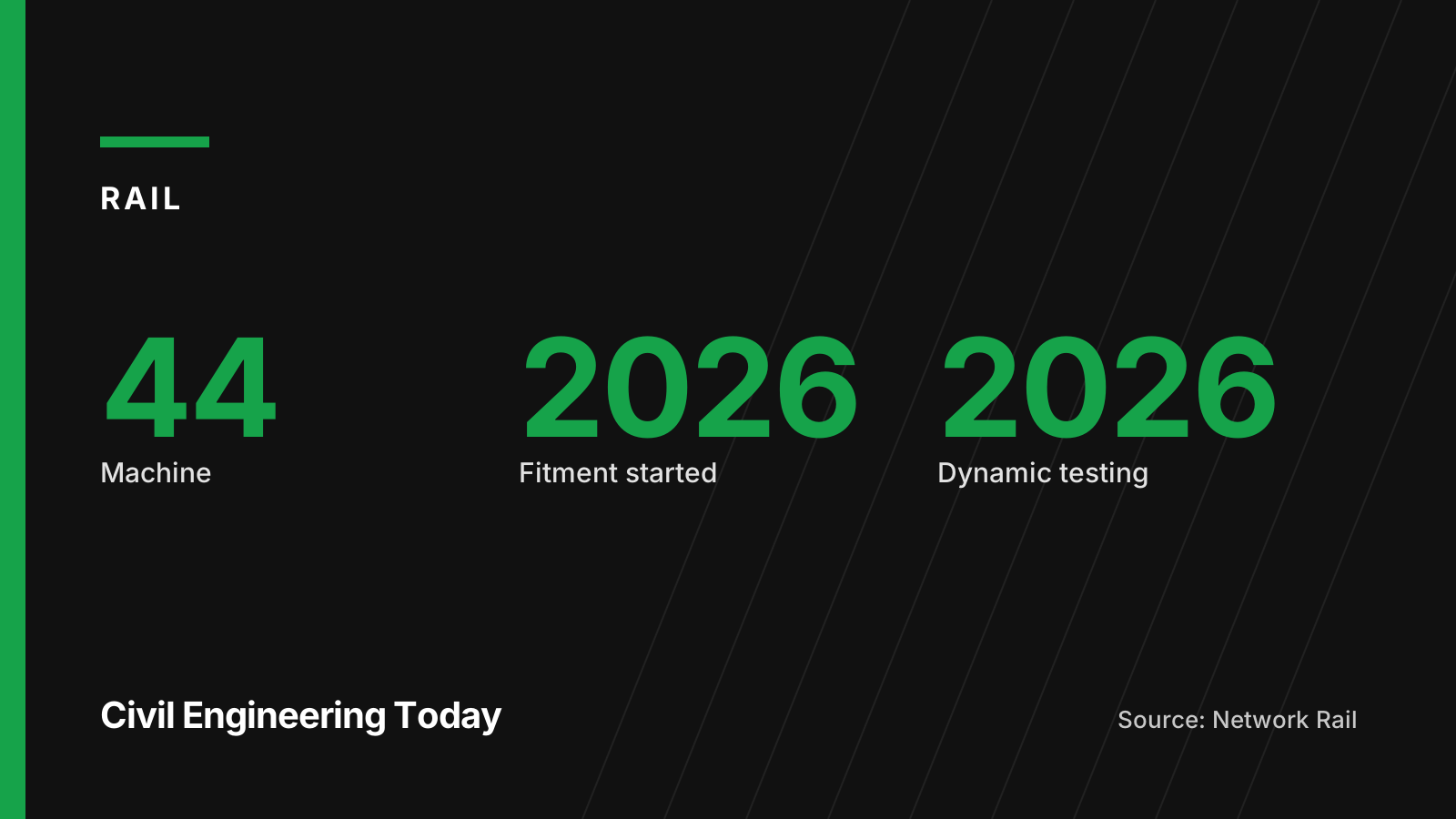
Hitachi Rail in-cab signalling is being installed on Colas-operated C44 grinder C44-02 in Derby, with testing at Melton later this year and handback planned for early 2027.
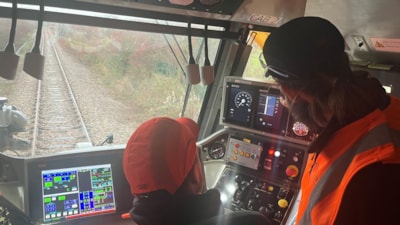
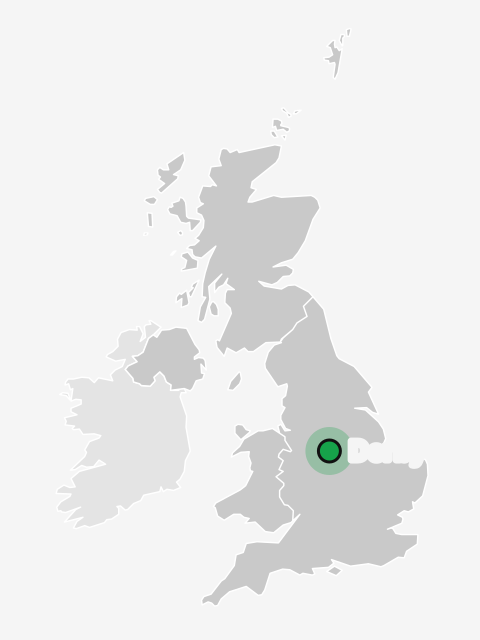
Loram has started fitting European Train Control System (ETCS) in-cab signalling to a second of the rail grinders it supplies to Network Rail, with work on C44 grinder C44-02 under way at its engineering facility in Derby.
Network Rail said the machine is receiving a Hitachi Rail ETCS system and that this is the first Loram fitment to be funded through the East Coast Digital Programme (ECDP). Loram's Derby-based engineering and installation teams began the work in June 2026.
The C44 fitment follows the introduction of Hitachi Rail ETCS equipment on Loram's new RGC grinding unit earlier in 2026. Network Rail said the RGC installation and its roll-out to the C44 came from collaboration between Hitachi Rail, Network Rail and Colas, which operates the C44 grinder.
Lee Tinney, managing director of Loram EMEA, said the programme "is helping us to showcase how ETCS can be fitted to On Track Machines both cost effectively and at pace." He said three C44 grinders are deployed by Network Rail to support track maintenance and management teams across the network.
Testing and handback
Static testing is due to start shortly at the RTC in Derby, followed by dynamic testing at Network Rail's Melton test track towards the end of 2026, according to Network Rail.
C44-02 will be handed back to Colas for operational deployment across the network in early 2027. It will initially run in ETCS dormant mode, with ETCS Level 2 activated after an agreed approvals and assurance process.
Once the machine has been evaluated in service, a third grinder, C44-03, will enter the fitment programme in Derby, Network Rail said.
Chris Hobden, programme director (ECDP) at Network Rail, said: "Progressing OTM fitment is an important part of our overall strategy to get to signals away on the East Coast Main Line, the end goal being a more reliable, more capable and even safer railway for customers." He said the grinder work would provide learnings for the on-track machine (OTM) sector as a whole.
Paul Maynard, VP mainline signalling at Hitachi Rail SRS UK, said that as ECDP progresses, engineering fleets must be equipped to operate within a digital signalling environment.
The grinder fleet
Colas Rail introduced the three Loram C44 plain line grinders into service in 2017, according to Colas Rail. The largest, C44-03, is a 64-stone machine almost 150m long. Network Rail said at the time that it had worked with Loram and Colas Rail to design, build and maintain the trains.
Colas Rail holds Network Rail's nationwide rail grinding contract, under which it operates and maintains six grinding machines and delivers almost 1,400 operational shifts a year in 24/7 operation. The company said the fleet covers around 5,000 miles of railhead a year, removing metal to manage the profile and running band.
Loram's RGC grinder, the first machine to receive ETCS, is a compact production grinder for passenger and commuter systems that conforms to the UK W6A clearance diagram, according to Loram. The company describes itself as a global rail grinding specialist of more than 50 years' standing and runs 100,000 sq ft of rolling stock and infrastructure engineering facilities at the RTC Business Park in Derby.
The programme
The £1.4bn ECDP replaces lineside signals with digital in-cab signalling using ETCS, which gives continuous speed-based signalling on a screen in the driver's cab, according to Network Rail. Its end goal is a no-signals railway on the southern part of the East Coast Main Line.
Network Rail said the Welwyn to Hitchin section, commissioned in February 2024, was Britain's first infrastructure commissioning towards a no-signals intercity main line. It said the ECDP upgrades will cut carbon emissions by a further 55,000 tonnes over 60 years.
The dynamic testing will take place at Network Rail's Old Dalby test track at Melton Mowbray in Leicestershire. Network Rail said the track, which opened in 1966, provides 13 miles of intercity railway including 11 miles of live overhead electrification, allowing trains to run at up to 125mph. It is used by the industry and its suppliers to test new and modified trains, machines and plant.
Network Rail's second test facility is at Tuxford in Nottinghamshire.
Sources
- Network Rail (opens in a new tab) (accessed 2026-10-06)
- Network Rail (opens in a new tab) (accessed 2026-10-06)
- Network Rail (opens in a new tab) (accessed 2026-10-06)
- Network Rail (opens in a new tab) (accessed 2026-10-06)
- Colas Rail (opens in a new tab) (accessed 2026-10-06)
- Network Rail (opens in a new tab) (accessed 2026-10-06)
- Loram (opens in a new tab) (accessed 2026-10-06)
- Loram (opens in a new tab) (accessed 2026-10-06)
This story was researched from the primary sources above and checked against them before publication. Spotted an error? Tell us and we will correct it promptly.