milestones
BDA updates rotary coring course in third online training announcement in just over a week
The British Drilling Association has added learning-check questions and a completion certificate to its Rotary Coring for Drillers course, its third course announcement on the training portal since 5 October.
The British Drilling Association (BDA) has updated its Rotary Coring for Drillers online course, adding questions to reinforce learning and a certificate on completion, with the course free to members through the BDA Training Portal.
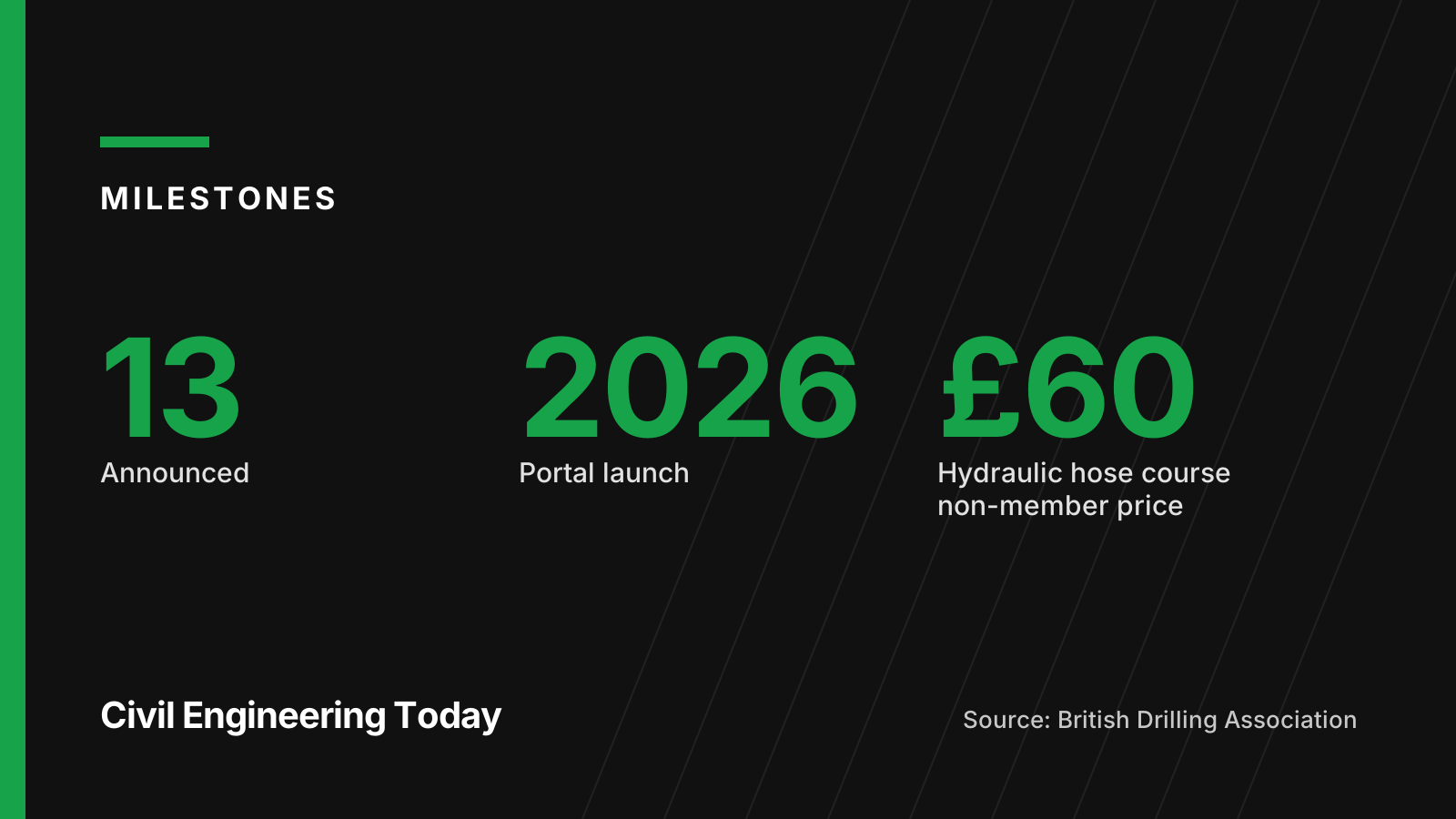
The trade body announced the update on 13 October. It said the course covers good practice around rotary coring, the equipment involved and the handling and storage of rotary cores.
According to the BDA, the course is designed to support ongoing competence and consistent working practices for those involved in rotary coring operations.
The BDA said it will continue to add training to the portal so that members and the wider drilling sector can access relevant learning online.
The portal
The BDA Training Portal went live in late September 2026 as a platform for individuals and employers to access drilling-industry training resources. The BDA said it was created to support competence, safety and continued professional development across the sector, and was designed to grow with further courses planned.
The association said the portal is aimed not only at drillers but at employers and those responsible for training, health and safety and operations.
The rotary coring update is the third course announcement the BDA has published about the portal in just over a week. On 5 October it launched a new course, Hydraulic Hose Inspection for Land Drilling, which is free to employees of BDA member companies and costs £60 per person for non-members. On 7 October it announced an update to its Wireline Safety for Drillers course, which addresses safety considerations around moving and tensioned wireline, equipment and the working area.
The 13 October announcement did not give a non-member price for the rotary coring course. The association describes the online courses as part of a growing programme of online learning.
Link to the BDA Audit
The BDA's Training & Education Sub-Committee met virtually on 9 September 2026, chaired by Paul McMann, and reviewed the new training platform. According to the BDA's précis of the meeting, members agreed the platform was easy to use and highlighted its automatic certificate function as particularly useful.
The sub-committee also said the hydraulic hose training will form part of the pre-audit checklist and be a prerequisite for the BDA Audit.
The BDA's stated position is that it is not adequate for organisations or individuals to self-declare that they or their employees are competent. The association said the BDA Audit was introduced to confirm ongoing competence after the NVQ (National Vocational Qualification).
Background
The BDA is a professional trade association formed in 1976 to represent the land drilling and geotechnical sector. It does not cover petroleum and gas extraction operations.
The updated rotary coring course is available now through the BDA Training Portal, and the association said further courses and educational materials are planned for the platform.
Sources
- British Drilling Association (opens in a new tab) (accessed 2026-10-14)
- British Drilling Association (opens in a new tab) (accessed 2026-10-14)
- British Drilling Association (opens in a new tab) (accessed 2026-10-14)
- British Drilling Association (opens in a new tab) (accessed 2026-10-14)
- British Drilling Association (opens in a new tab) (accessed 2026-10-14)
- British Drilling Association (opens in a new tab) (accessed 2026-10-14)
- British Drilling Association (opens in a new tab) (accessed 2026-10-14)
This story was researched from the primary sources above and checked against them before publication. Spotted an error? Tell us and we will correct it promptly.