roads
Welsh Government sets out climate resilience plans for rail, roads and ports
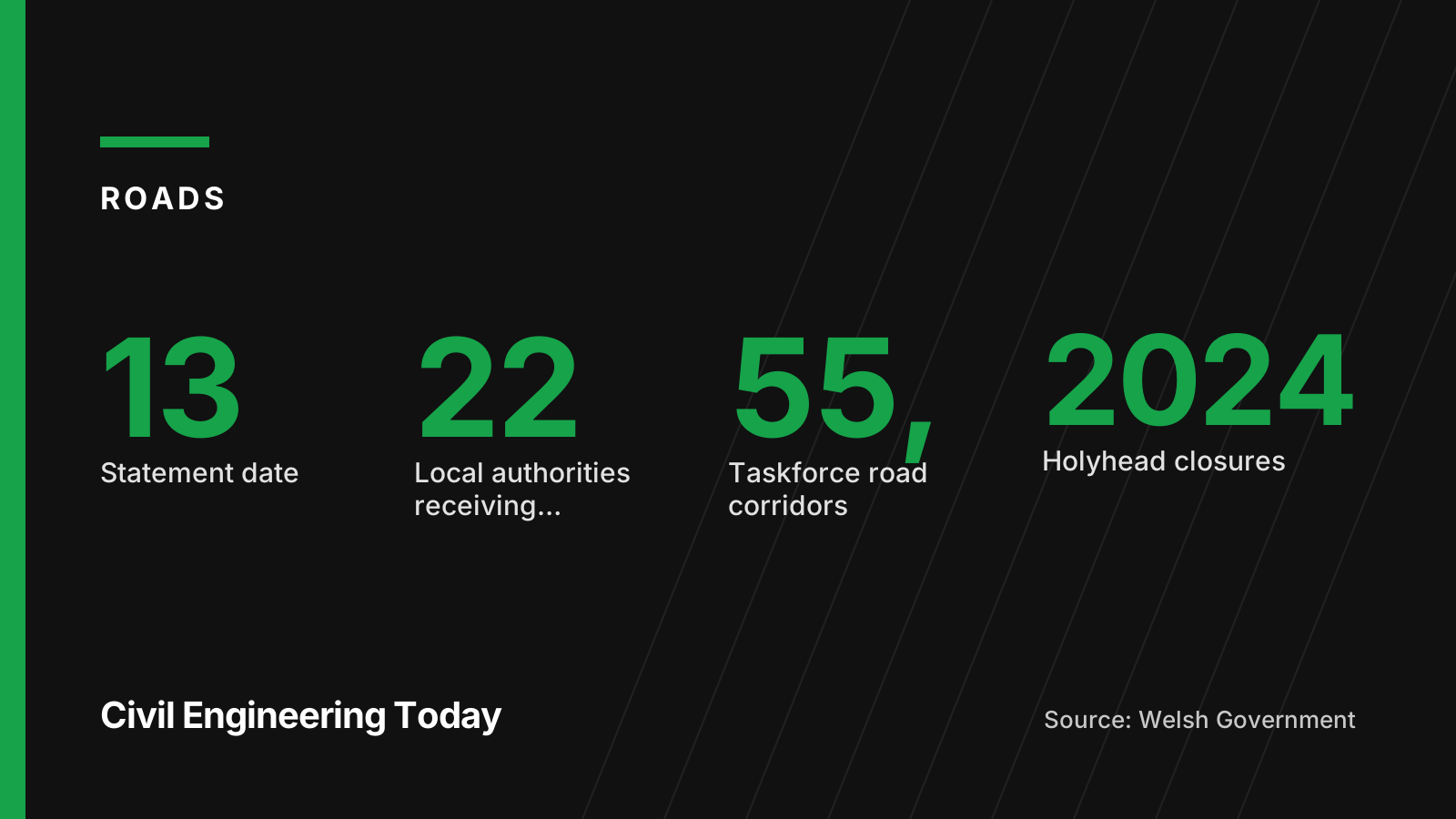
Deputy Minister for Transport Mark Hooper told the Senedd on 13 October that action across rail, buses, roads and ports follows summer heat disruption and the December 2024 Holyhead closure.

Deputy Minister for Transport Mark Hooper set out plans on Tuesday 13 October to make Wales's transport network more resilient to climate change, covering rail, buses, the Strategic Road Network and the country's ferry ports.
In a Senedd Plenary statement, Hooper said future investment programmes across rail, bus, Metro and road infrastructure would be planned for the climate conditions expected in coming decades, with lessons from recent extreme weather feeding into that planning.
Mark Hooper, Deputy Minister for Transport, said: "Climate change is already affecting Wales, with hotter, drier summers, milder and wetter winters, sea-level rise, and increased risks of flooding, drought and wildfire."
He added: "We cannot prevent every disruption caused by extreme weather - but we can be better prepared, more resilient and more responsive."
Rail and buses
According to the Welsh Government, this summer's extreme heat caused some trains to be withdrawn because of cooling-system problems, led to speed restrictions and put pressure on bus services, roads and active travel routes.
In response, Transport for Wales (TfW) is working with Network Rail to strengthen maintenance and inspection regimes, improve the reliability of train cooling systems and introduce enhanced weather monitoring, the government said.
The heat followed a rare red extreme heat warning for parts of Wales, which the Welsh Government flagged in a 23 June written statement warning of likely disruption to transport, particularly rail. TfW said on 25 June that the warning covered parts of the Midlands, South Wales and Southern England until 21:00 that day, and that extreme heat can affect tracks, overhead power lines and trains.
On buses, officials are working with TfW through bus franchising to factor flooding, overheating, severe weather and energy resilience into fleet renewal, the government said.
Roads
On the Strategic Road Network, the Welsh Government said lessons from recent storms, floods and heatwaves are shaping how roads are managed and maintained.
Ahead of winter, salt and grit stocks are being monitored, and resilience and adaptation training is being rolled out to all 22 Welsh local authorities to help manage flooding, landslips and storm impacts on the wider road network.
Hooper's portfolio includes the construction, improvement and maintenance of motorways and trunk roads, as well as TfW, bus services, rail and ports policy. He was appointed Deputy Minister for Transport on 13 May 2026 and represents the Pen-y-bont Bro Morgannwg constituency.
Ports and the Irish Sea Taskforce
The Welsh Government named Holyhead, Fishguard and Pembroke Dock as Wales's major ferry ports and said the prolonged disruption at Holyhead in December 2024 showed how quickly the closure of one gateway can have wider consequences.
The Irish Sea Taskforce was set up in response. It held its first meeting in Anglesey on 27 March 2025, led by Ken Skates, then Cabinet Secretary for Transport and North Wales, alongside Rebecca Evans and Irish Minister of State for Transport Seán Canney, with representatives from the Welsh, Irish, UK, Scottish and Northern Ireland governments.
Skates published the taskforce's recommendations in a written statement on 14 January 2026. They include resilience work on the A55, A494 and M4 corridors and on the Menai Crossings, and refining stacking arrangements when ports are disrupted. The Welsh Government has also committed to establish a freight council and has commissioned a survey of truck stop facilities.
That statement noted Holyhead Port closed briefly again in January 2026, and that the government responded using taskforce lessons without formally reconvening it.
What happens next
Hooper said a resilience exercise focusing on an unforeseen Welsh port closure is being prepared over the coming months with partners on both sides of the Irish Sea.
In a 1 October written statement on his 9-10 September visit to Ireland, which took in Fishguard, Rosslare and Dublin ports, Hooper framed the trip as resilience planning against potential port closures ahead of the winter sailing season. He said a six-month update to the taskforce recommendations would be published shortly alongside a written statement.
Sources
- Welsh Government (opens in a new tab) (accessed 2026-10-14)
- Welsh Government (opens in a new tab) (accessed 2026-10-14)
- Welsh Government (opens in a new tab) (accessed 2026-10-14)
- Welsh Government (opens in a new tab) (accessed 2026-10-14)
- Welsh Government (opens in a new tab) (accessed 2026-10-14)
- Welsh Government (opens in a new tab) (accessed 2026-10-14)
- Transport for Wales (opens in a new tab) (accessed 2026-10-14)
This story was researched from the primary sources above and checked against them before publication. Spotted an error? Tell us and we will correct it promptly.