rail
Network Rail and TfW join forces again on autumn resilience for Wales and Borders route
Temporary timetables, four railhead treatment trains, drainage upgrades near Gobowen, 10 new weather stations and a new wheel lathe at Canton, part of a £2.5m investment, make up this year's autumn plan for Wales and the Borders.
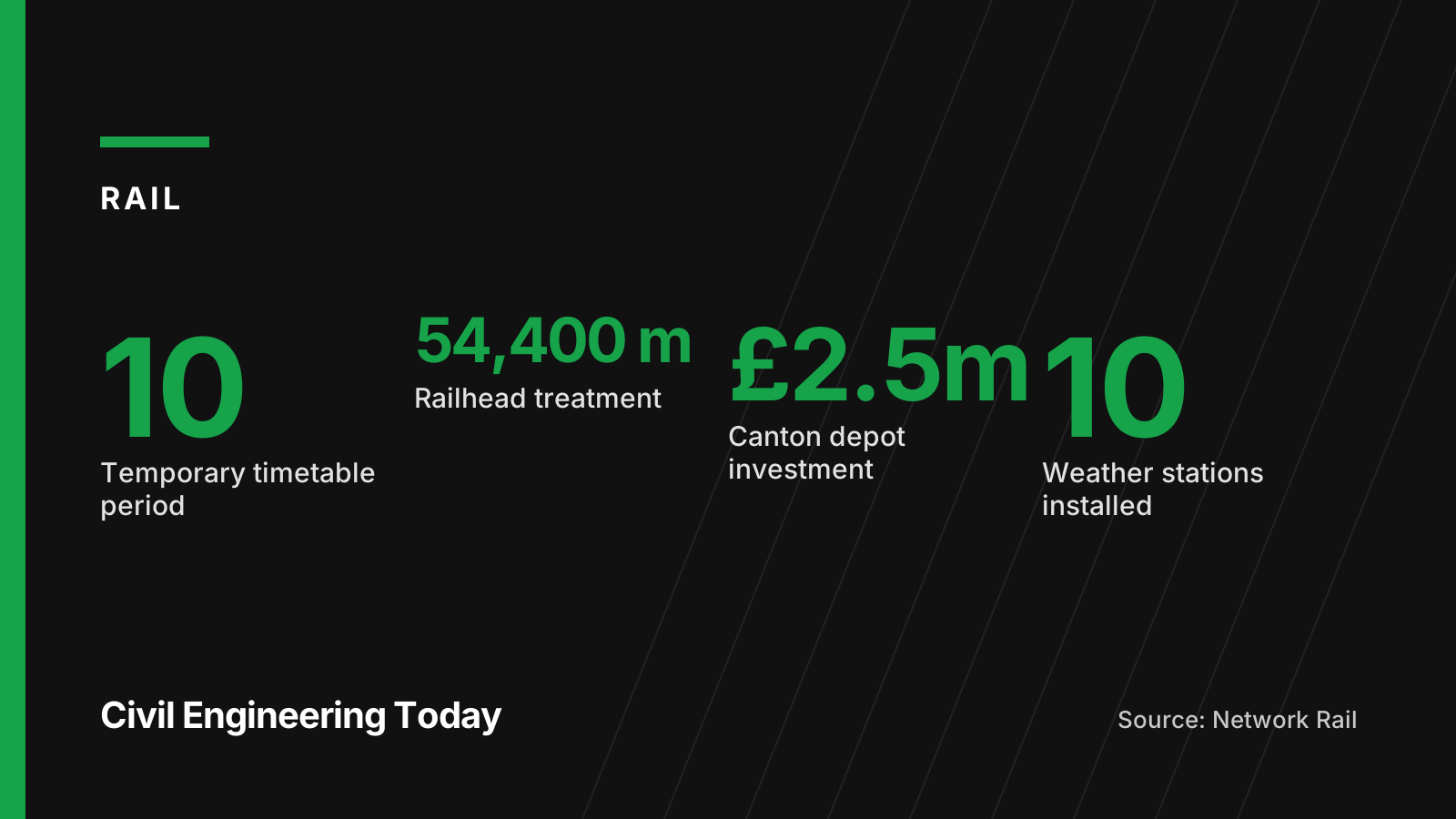
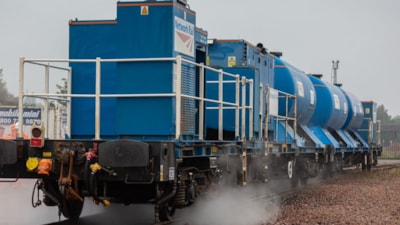
Network Rail and Transport for Wales have joined forces again on an autumn programme for the Wales and Borders route, with timetable changes from today and four treatment trains covering more than 54,400 miles of track.
The programme, announced by Network Rail on 9 October, comes as the Met Office forecasts an increased chance of wetter and windier than average conditions this autumn and winter. Its latest three-month outlook put the chance of a warm and wet autumn at around one-and-a-half to two times higher than normal, with a greater likelihood of windy conditions emerging later in the season.
Transport for Wales (TfW) is running temporary timetable changes on selected routes from Saturday 10 October to Friday 4 December. According to TfW, the routes affected are Wrexham to Bidston, the Conwy Valley, the Marches line between Shrewsbury and Newport, Shrewsbury to Birmingham, Shrewsbury to Chester and Crewe, and Maesteg to Ebbw Vale. The 22:13 Ebbw Vale Town to Maesteg service will not run Monday to Friday so that the railhead treatment train can run on the Maesteg line.
Colin Lea, Planning & Performance Director at Transport for Wales, said: "This year, we've been able to include these changes in journey planners 12 weeks in advance, giving customers more notice so they can plan their journeys with confidence."
Last year's results
TfW said last autumn's temporary timetables contributed to a 45% reduction in autumn-related delays on the Wrexham to Bidston line and what it describes as a 233% improvement on the Conwy Valley line.
Both lines have had attention beyond timetabling. In 2024 Network Rail set out a tree and vegetation management programme on the Wrexham to Bidston (Borderlands) line, concentrated within 600 metres of ten stations between Wrexham General and Hawarden Bridge, removing poplar, ash and sycamore whose leaf fall can affect braking. Adrian Jones, Network Rail project manager, said in 2024 that small-scale maintenance had not kept vegetation on the line under safe control.
On the Conwy Valley line, which TfW said has been closed for more than 500 days because of storm damage, Network Rail trialled a new rail treatment solution in autumn 2025. TfW and Network Rail invested £1.4m in 2025 on winter preparation, including clearing trees and vegetation.
Track and drainage
Network Rail Wales and Borders is deploying four treatment trains this autumn, which it said will treat more than 54,400 miles of track across 224 circuits. The trains use high-pressure water to clear leaf contamination from the railhead and apply an adhesion modifier at selected locations. Nationally, Network Rail runs 61 such trains and receives adhesion forecasts twice a day from a specialist forecaster between 1 October and 13 December.
Network Rail said it has carried out drainage upgrades at locations repeatedly affected by flooding, including near Gobowen, and will have 10 Autumn Response Teams on standby. The Gobowen work was planned as part of an August blockade in North Wales and the Borders, which was scheduled from the night of Sunday 16 August until Sunday 30 August. Network Rail said in August that engineers would replace an ageing syphon and install the route's first automated trash screen, powered by water and solar energy, to remove branches, weeds and litter before they block the drainage system. The same programme was to include more than a kilometre of drainage pipe renewal at Babbinswood.
For the first time, 10 weather stations have been installed across the route to give teams real-time local data. Network Rail said hard ground after a hot, dry summer can be less able to absorb sudden downpours, raising flood risk.
Martin Taylor, Chief Infrastructure Officer for Network Rail Wales and Borders, said: "By planning early, making use of the latest operational and weather intelligence, and working closely with industry partners, we can manage safety, risk, minimise disruption and keep services running reliably throughout the autumn period."
Fleet resilience at Canton
On the rolling stock side, TfW has installed a new wheel lathe at Canton depot in Cardiff as part of a £2.5m investment there. Wheel slip on compressed leaves can create flat spots on wheels; lathes reprofile them, cutting the time trains spend out of service. The Canton lathe follows a new wheel lathe at Holyhead, which TfW announced in October 2025.
The lathe adds to a £12m bogie drop installed at Canton in July 2026, funded by the Welsh Government through TfW to speed up maintenance of its new trains. Dan Tipper, Chief Infrastructure Officer at TfW, said at the time that bringing specialist maintenance in-house would speed up repair times.
Sarah Davies, Met Office Head of Environment and Energy, said El Niño can raise the likelihood of wetter conditions in late autumn and early winter. The Met Office said the current El Niño is at near-record levels and expected to peak during winter, and that it remains too early to identify specific impacts for particular parts of the UK.
The temporary timetables run until Friday 4 December 2026.
Sources
- Network Rail (opens in a new tab) (accessed 2026-10-10)
- Transport for Wales (opens in a new tab) (accessed 2026-10-10)
- Transport for Wales (opens in a new tab) (accessed 2026-10-10)
- Transport for Wales (opens in a new tab) (accessed 2026-10-10)
- Network Rail (opens in a new tab) (accessed 2026-10-10)
- Met Office (opens in a new tab) (accessed 2026-10-10)
- Network Rail (opens in a new tab) (accessed 2026-10-10)
- Network Rail (opens in a new tab) (accessed 2026-10-10)
This story was researched from the primary sources above and checked against them before publication. Spotted an error? Tell us and we will correct it promptly.