milestones
Scottish infrastructure owners commission joint study of cascading climate risks
The Climate Ready Infrastructure Scotland Forum is tendering a 12-month study, backed by 21 funders, to map how climate-driven failures could spread between transport, energy, water supply and communications networks.
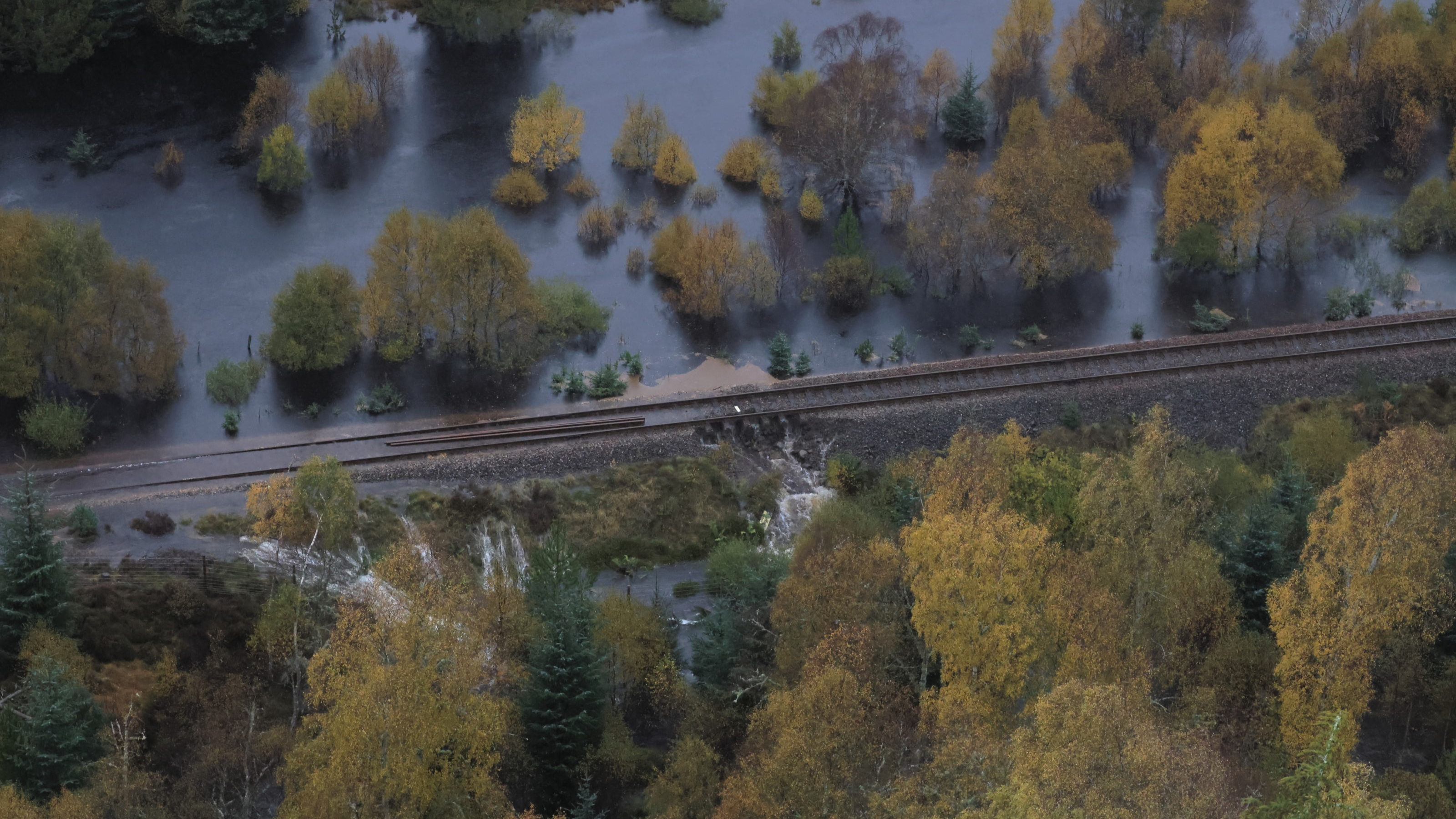
A coalition of 21 Scottish infrastructure owners, operators and public bodies is commissioning a 12-month study into how climate-related failures could spread from one network to another, Network Rail announced on 20 October.
The research, formally named the Climate Risk Interdependencies Commission, is being procured by the Climate Ready Infrastructure Scotland Forum (CRIS), a partnership of infrastructure operators, government bodies and academic institutions. Network Rail said it is believed to be one of the first studies of its kind in the world to be jointly commissioned by multiple infrastructure owners and operators.
The work will cover transport, energy, water supply and communications. According to Network Rail, it will produce the first shared register of how Scotland's infrastructure systems depend on one another and identify the points in that system where climate-related failures would have the greatest consequences.
David Harkin, Network Rail Scotland's weather resilience and climate change adaptation strategy manager and co-chair of the CRIS forum, said: "Much of our infrastructure was built for a climate that no longer exists." He said that was why the forum was created.
He said a power outage can affect communications, transport disruption can delay recovery efforts, and the impacts can reach far beyond the point of the original damage.
The study
Once the register is built, the commission will test its findings through a series of place-based case studies across Scotland, Network Rail said. These will simulate what the identified risks could mean for communities, businesses and essential services.
The National Centre for Resilience, hosted by the University of Glasgow, will manage the procurement and coordinate delivery on behalf of the funders. The centre was launched in March 2016 at the university's Crichton Campus in Dumfries as a natural hazards research hub funded by the Scottish Government.
Fabrice Renaud, professor of environmental risk and community resilience and director of the centre, said the commission would look across sectors to identify where interconnected vulnerabilities lie and what they could mean for the provision of essential services.
The project will go out to tender through Public Contracts Scotland, with the appointed supplier delivering the research over 12 months.
The funders
Network Rail said the study is funded by a coalition of infrastructure owners, operators and public bodies with support from the Scottish Government. Partners named in the announcement include Network Rail, Scottish Water, ScotRail, Openreach, SSEN Distribution and Transmission, Transport Scotland and the Met Office.
The full funder list as of October 2026 runs to 21 bodies. It includes Caledonian Maritime Assets Ltd (CMAL), Scottish Canals, Strathclyde Partnership for Transport (SPT), NHS Greater Glasgow and Clyde, the Scottish Prison Service, Creative Scotland, NESTRAN, Crown Estate Scotland, the Northern Lighthouse Board, NatureScot, the Scottish Environment Protection Agency (SEPA) and Scottish Futures Trust.
Gillian Martin MSP, cabinet secretary for climate action and rural affairs, said that by building a shared understanding of climate risks across critical networks, "we will be in a better position to help identify interdependencies and ensure investment is targeted to maximise improvements to system-wide resilience."
Background
The CRIS forum was officially launched in May 2025 with more than 20 organisations from infrastructure, government and academia, and is co-chaired by Network Rail Scotland and Scottish Water. Network Rail's launch release said the forum was co-founded by Network Rail, Scottish Water and SP Energy Networks, and that members signed a memorandum of understanding on Wednesday 7 May 2025, a date also given by CMAL.
Understanding climate-related risk interdependencies between infrastructure systems was a stated aim of the forum from the outset, according to that release. The forum also has a longer-term aim of co-developing on-the-ground adaptation interventions in areas of shared climate risk.
Adaptation Scotland's website says a Climate Ready Infrastructure Forum for Scotland had been proposed as the next step from a workshop it had run.
The study has a statutory backdrop. The Climate Change (Scotland) Act 2009 requires the Scottish Government to implement an adaptation plan, and the Scottish National Adaptation Plan 2024-2029 recognises that an impact in one sector could cascade and disrupt others and the essential services they support. One of the plan's stated outcomes is that public services collaborate in effective and inclusive adaptation action.
At the forum's launch, Mark Williams, head of sustainability at Scottish Water, said effective climate adaptation for Scotland's communities demands partnership working. Ruth Rice, CMAL's environmental and sustainability manager, said the forum's members combined have a wealth of experience in climate risk and adaptation.
The tender is to be published through Public Contracts Scotland, with the research to be delivered over the 12 months following the supplier's appointment.
Sources
- Network Rail (opens in a new tab) (accessed 2026-10-20)
- Network Rail (opens in a new tab) (accessed 2026-10-20)
- Caledonian Maritime Assets Ltd (CMAL) (opens in a new tab) (accessed 2026-10-20)
- Adaptation Scotland (Sniffer) (opens in a new tab) (accessed 2026-10-20)
- Scottish Government (opens in a new tab) (accessed 2026-10-20)
- University of Glasgow (opens in a new tab) (accessed 2026-10-20)
This story was researched from the primary sources above and checked against them before publication. Spotted an error? Tell us and we will correct it promptly.