water
Thames Water marks 100 days of drought with London reservoirs at 56%
Thames Water says its region has passed 100 days of drought, with London reservoir storage at 56% against a 77% seasonal average, a hosepipe ban still in force and leak repairs running above 1,000 a week.
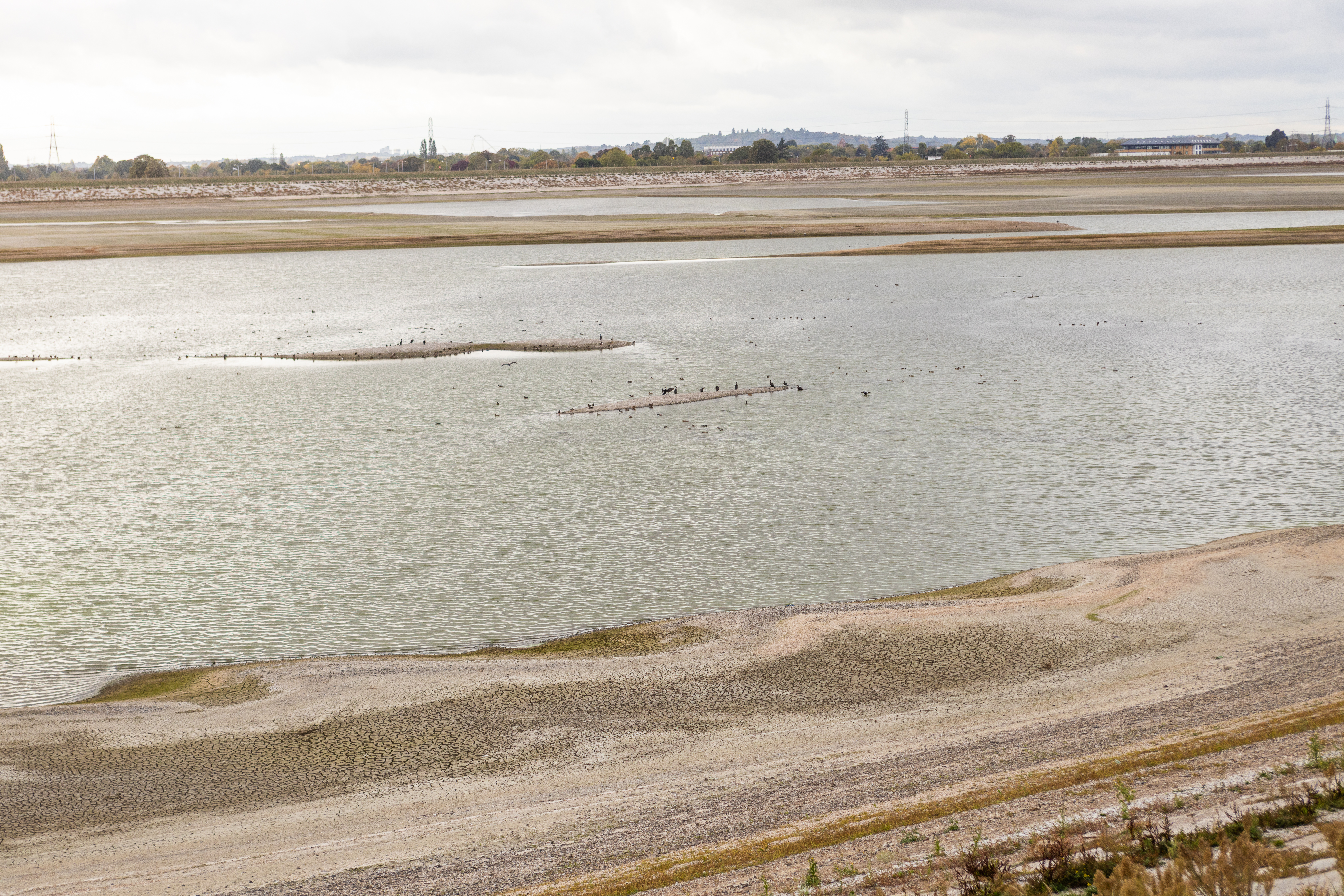
Thames Water said on 5 November that its region had reached 100 days of drought, with total London reservoir storage at 56% on 3 November against a 77% average for the time of year.
Farmoor Reservoir in Oxfordshire stood at 76% capacity on the same date, compared with a 90% average, the company said. River flows were below normal and groundwater in London ranged from below normal to exceptionally low at the end of October.
The Environment Agency declared drought in London and the Thames Valley on 29 July. Thames Water said recent rain had helped some rivers and reservoirs recover, but months of sustained rainfall were still needed to rebuild supplies.
Julie Morton, Head of Water Resources at Thames Water, said: "The forecast looks relatively dry for the first half of November, and we need sustained rainfall through the autumn and winter to replenish water resources ahead of next spring and summer."
Rainfall and storage
From 1 August to 31 October 2026 the region received 80.8% of its long-term average rainfall, Thames Water said, compared with 156.8% in the same period of 2024, which it described as a non-drought year.
The company's own monthly data shows how the dry spell built. Thames catchment rainfall in July 2026 was under 1mm, 2% of the long-term average, and September brought 30.9mm, or 53% of average.
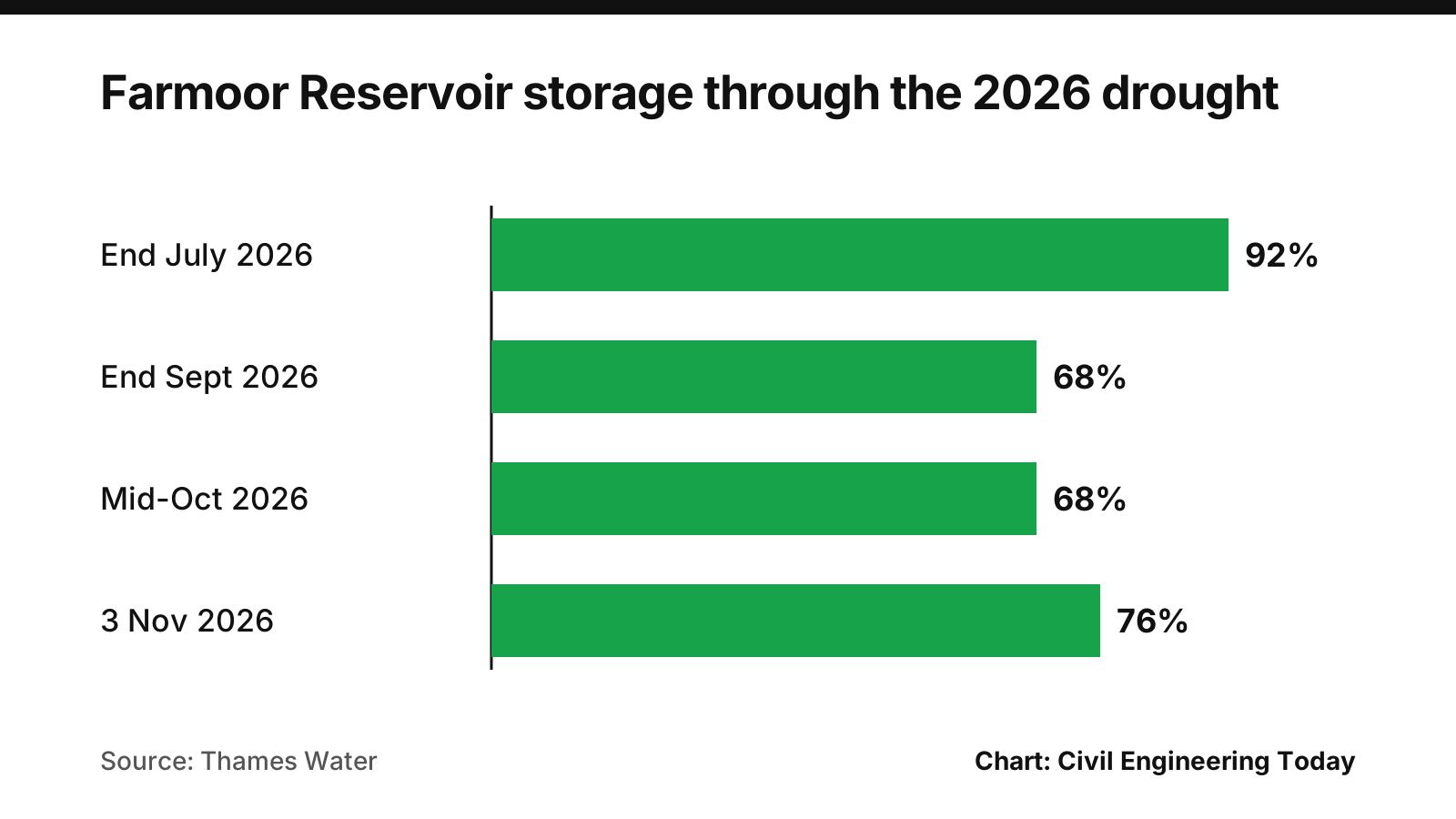
Reservoir storage fell through the summer before a partial recovery at Farmoor, according to Thames Water's published figures.
| Date | Farmoor Reservoir | London reservoirs |
|---|---|---|
| End of July 2026 | 92% | 74% |
| End of September 2026 | 68% | 56% |
| Mid-October 2026 | 68% | 54% |
| 3 November 2026 | 76% | 56% |
At the end of September, London's West London reservoirs were 53% full and the Lee Valley group 68%, and groundwater levels were notably low in Swindon and Oxfordshire, the company's data page shows. The Teddington Target Flow was reduced to 250 megalitres a day on 8 September 2026.
Restrictions and permits
A Temporary Use Ban remains in place for all Thames Water customers. The company said cooler weather did not mean the drought was over and that restrictions would only lift when substantial rainfall replenished supplies and conditions allowed.
The ban took effect at 00.01 BST on 23 July 2026. At the time, Thames Water said demand was about 10% above normal in the Thames Valley and Home Counties and 7% above normal in London. In August it reported household demand had since fallen by about 3% in London and more than 6% in the Thames Valley and Home Counties.
On 29 September the Environment Agency granted Thames Water a drought permit for Farmoor, a six-month variation of its licence allowing more abstraction from the River Thames at Farmoor. A drought permit is a temporary permission from the agency that changes or suspends abstraction licence conditions, Thames Water said.
The Environment Agency's weekly report for 23 to 29 October lists Thames Water at Drought Level 3 in its Swindon and Oxfordshire water resource zone. In August the company had said it was at Drought Event Level 2.
Drought-related navigation restrictions remained on parts of the River Thames as of 29 October, the agency said, including at locks from St. John's to Osney and from Penton Hook to Teddington.
Leakage
Thames Water said it was fixing more than 1,000 leaks a week, about 20% more than normal, and had increased the number of people finding and resolving leaks by 18% on last year. In July it had reported repairing more than 750 leaks a week, and said its teams found 88% more leaks in July 2026 than in July 2025.
The company said it is investing £3.3bn between 2025 and 2030 on leakage and resilience, and that leakage is 15.1% below the 2019/20 baseline. It has laid more than 100km of new water mains since April 2025 and installed more than 1.3 million smart meters.
The wider picture
When it declared drought on 29 July, the Environment Agency said half of England was affected, naming seven areas including Hertfordshire and the whole of London, and Thames Valley. It described the conditions as a flash drought brought on by very low rainfall and higher temperatures, and said the River Thames at Reading was tracking its lowest flows on record for the time of year.
Helen Wakeham, Director of Water at the Environment Agency and Chair of the National Drought Group, said at the time: "The hot and dry weather means we are currently using water faster than nature can replenish it."
The agency said it had staunched Old Windsor weir to reduce leakage and support Thames Water's abstraction downstream for London drinking water. By 29 July, seven water companies had introduced Temporary Use Bans covering 23 million customers.
In its latest weekly report the agency said severe drought remained in parts of Cornwall, Devon, Dorset, Somerset, East Sussex and West Sussex, while Cumbria and Lancashire, and Greater Manchester, Merseyside and Cheshire, moved to recovery on 28 October.
On the record: Thames Water, Environment Agency
Sources
- Thames Water (opens in a new tab) (accessed 2026-11-06)
- Environment Agency / Defra (GOV.UK) (opens in a new tab) (accessed 2026-11-06)
- Thames Water (opens in a new tab) (accessed 2026-11-06)
- Thames Water (opens in a new tab) (accessed 2026-11-06)
- Thames Water (opens in a new tab) (accessed 2026-11-06)
- Thames Water (opens in a new tab) (accessed 2026-11-06)
- Environment Agency (GOV.UK) (opens in a new tab) (accessed 2026-11-06)
This story was researched from the primary sources above and checked against them before publication. Spotted an error? Tell us and we will correct it promptly.