ports
DfT formally amends national policy statement for ports after Commons scrutiny period ends
The Department for Transport has designated a revised national policy statement for ports, replacing the 2012 version, after no resolution against it was passed within the 21 sitting days set by the Planning Act 2008.
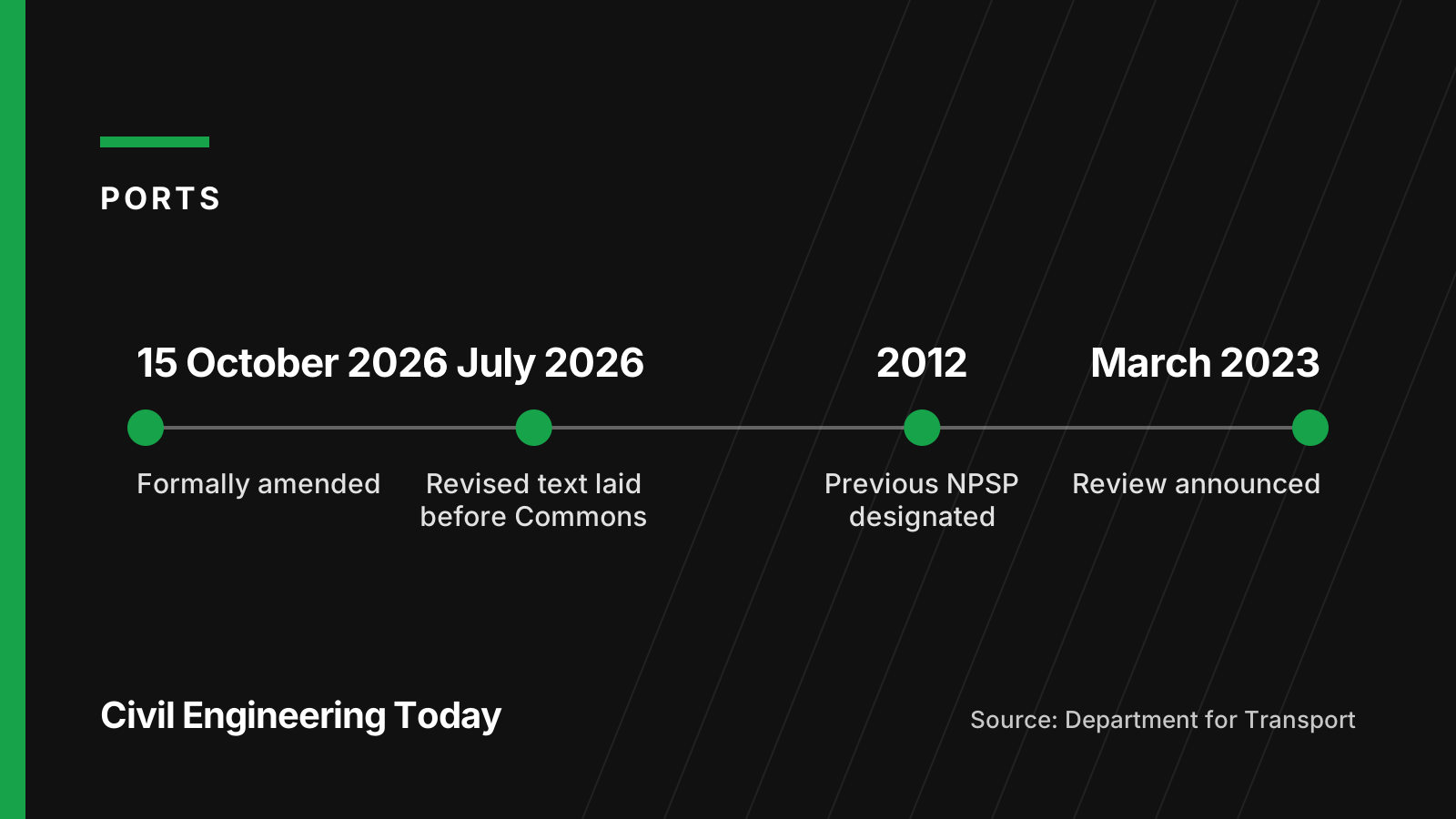
The Department for Transport formally amended the national policy statement for ports (NPSP) on 15 October 2026, ending a review of the port planning framework that the previous government announced in March 2023.
Keir Mather MP, Minister for Aviation, Maritime and Logistics, told the House of Commons in a written statement that he had laid the revised text before the House on 6 July and that no resolution against it had been passed within the 21 sitting days prescribed by the Planning Act 2008. He said he was amending the NPSP under section 6(9) of that Act.
The NPSP applies to ports in England and to reserved trust ports in Wales, which the DfT said currently means Milford Haven only. According to the department, the statement is also relevant to the road and rail links associated with ports.
Mather said: "The updated national policy statement will provide strong support for investment, responsive to customers' requirements, contributing to national resilience and in harmony with the environment."
What the revised statement changes
The DfT said the previous NPSP was designated in 2012. In its laying statement of 6 July 2026, the department said the revised version keeps the policy of letting the ports sector respond to market demand, using the department's port freight demand forecasts as a yardstick rather than a constraint on commercial judgements.
The department said the updated statement would keep applicant-led assessment of need, improve clarity and certainty in the planning framework and reflect the role of ports in growth and clean energy. When the draft was published in June 2025, the DfT said the proposals aimed to streamline the planning process for ports in England, speed up applications and set out more clearly how ports can meet obligations on noise and emissions.
The DfT said port development in England is essential for growth, energy resilience and the energy transition, and should take account of the environment. The revised NPSP document runs to 127 pages, according to the GOV.UK publication page.
How the review ran
The draft revision was laid on 4 June 2025 by the then maritime minister Mike Kane MP, with parliamentary scrutiny running from 4 June to 14 November 2025. The DfT published UK-wide port freight demand forecasts alongside the draft and said the review was running in parallel with its wider planning reforms, including the Planning and Infrastructure Bill.
At the time, the department pointed to £35m being invested in a new deep-water terminal at the Port of Liverpool and just under £1bn at the Port of Tyne.
The Transport Select Committee published its report on the draft (HC 1028) on 14 November 2025. The DfT said consultation respondents supported updating the NPSP to improve planning certainty and reduce regulatory friction, and that it had considered the committee's recommendations. On 6 July 2026 it laid the final proposed text under section 9(8) of the Planning Act 2008 alongside its response to the committee and to the consultation.
Mather was appointed Parliamentary Under-Secretary of State at the DfT on 7 September 2025. He was elected MP for Selby in July 2024.
Industry response
The British Ports Association (BPA) said on 9 July 2026 that the revised statement would replace the 2012 statement once formally designated. It said applicants would not be required to demonstrate a national shortage of capacity before bringing forward proposals.
Richard Ballantyne OBE, BPA chief executive, said: "The revised statement provides a materially stronger and more supportive policy framework for port development".
Ballantyne said the BPA remained concerned about additional expectations around dredging and was disappointed that ports had not been granted Critical National Priority status, but that the overall direction of the new statement was positive.
What happens next
The DfT said a post-adoption statement would be published on its website in due course.
On the record: Department for Transport
Sources
- Department for Transport (GOV.UK) (opens in a new tab) (accessed 2026-10-16)
- Department for Transport (GOV.UK) (opens in a new tab) (accessed 2026-10-16)
- Department for Transport (GOV.UK) (opens in a new tab) (accessed 2026-10-16)
- Department for Transport (GOV.UK) (opens in a new tab) (accessed 2026-10-16)
- Department for Transport (GOV.UK) (opens in a new tab) (accessed 2026-10-16)
- Department for Transport (GOV.UK) (opens in a new tab) (accessed 2026-10-16)
- GOV.UK (opens in a new tab) (accessed 2026-10-16)
- British Ports Association (opens in a new tab) (accessed 2026-10-16)
This story was researched from the primary sources above and checked against them before publication. Spotted an error? Tell us and we will correct it promptly.